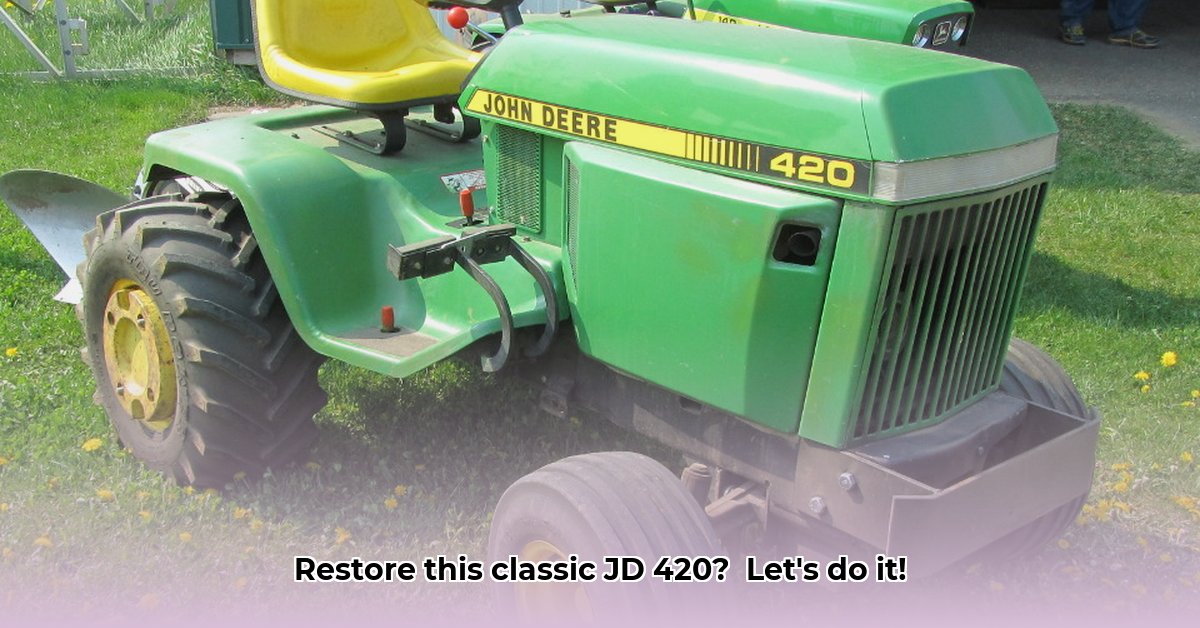
The John Deere 420 garden tractor, a stalwart of lawns across America from 1983-1991, represents a golden age of simple, robust engineering. This guide provides a comprehensive resource for owners, enthusiasts, and aspiring restorers, blending historical context with practical, step-by-step instructions. Whether you're tackling a minor tune-up or a full-scale restoration, this guide will help you bring your JD 420 back to its former glory. For more information on finding parts, check out this helpful resource: Used John Deere Tractors.
Unveiling the JD 420: A Mechanical Time Capsule
The JD 420’s enduring appeal stems from its powerful yet straightforward design. Its 20-horsepower Onan engine (either a B48G or P220G, depending on the year) provided ample power for a range of tasks. The smooth hydrostatic transmission and the extensive array of available attachments— from mowing decks of various sizes to snow blowers and even front-end loaders — solidified its reputation as a year-round workhorse. While lacking the sophisticated safety features of modern tractors, its simplicity and robust construction are precisely what make it so endearing to today’s enthusiasts. Isn't it fascinating how a machine from a simpler time can still command so much respect?
Restoring Your JD 420: A Step-by-Step Approach
Restoring a John Deere 420 is a rewarding project that combines mechanical skill with a touch of historical detective work. The following steps outline the process, from initial assessment to the final polish.
1. Initial Inspection: A Comprehensive Assessment
Begin with a thorough visual inspection. Note any damaged, missing, or worn components. Photography is crucial—document everything! This detailed record will be invaluable when ordering replacement parts. A complete inventory is essential to avoid unexpected delays later in the process. Have you ever started a project only to discover a missing piece halfway through?
2. The Parts Pursuit: Sourcing Your Treasures
Finding replacement parts for a classic tractor can be challenging but also rewarding. Online forums dedicated to vintage tractors are invaluable resources for connecting with other enthusiasts and locating parts suppliers. You'll find genuine John Deere parts, high-quality reproductions, and even fellow restorers who might have the part you need. Networking within these communities helps to overcome the challenges inherent in restoring vintage equipment.
3. Engine Revitalization: Maintaining the Heart of the Machine
The Onan engine is the lifeblood of your JD 420. Regular maintenance is paramount. This includes:
- Routine oil changes (using the manufacturer-specified oil type and weight).
- Replacing air and fuel filters.
- Thorough carburetor cleaning.
- Professional tune-ups are advisable for optimal performance. Did you know a properly tuned engine can increase fuel efficiency by up to 15%?
4. Transmission Tune-Up: Smooth Operation is Key
The hydrostatic transmission requires attention as well. Regular fluid and filter changes are crucial. Check carefully for any leaks—addressing them immediately prevents future problems. If you're uncomfortable working on the transmission yourself, seeking help from a qualified mechanic specializing in older equipment is always a good plan. Is it worth risking damage to the transmission to save on labor costs?
5. Mechanical Overhaul: Ensuring Everything Works in Harmony
Once the engine and transmission are in good working order, focus on the remaining mechanical parts. Carefully inspect belts, pulleys, and cables for wear, replacing anything showing significant damage. Thorough lubrication, using the correct greases and lubricants, is essential to prevent wear and tear. A well-lubricated machine runs smoother and lasts longer. How long do you expect your restoration to last?
6. Cosmetic Enhancement: The Finishing Touches
Finally, attend to the cosmetics. A fresh coat of paint and replacement decals can significantly enhance the appearance of your JD 420. Take your time and enjoy this rewarding phase. Use high-quality paints and follow proper application techniques to ensure a durable, smooth finish.
Common Challenges: Troubleshooting Your JD 420
Even with meticulous restoration, you might encounter problems. Common issues include:
- Engine Troubles: Difficulty starting often stems from carburetor or ignition system problems. Cleaning and adjustment are usually sufficient.
- Transmission Problems: Leaks or sluggish performance usually point to worn seals or internal damage that may require professional attention.
- Electrical Issues: Aging wiring is a common concern. Systematic troubleshooting, careful inspection of connections, and cleaning terminals are usually sufficient.
Parts and Resources: Your Restoration Allies
Finding parts is often the most demanding aspect. Beyond the online communities mentionedearlier, explore classic tractor parts suppliers and salvage yards. Collaboration with fellow enthusiasts is invaluable; their collective knowledge is a tremendous asset. Remember, finding the right part may require a patient search; thorough research and networking are key.
Safety First: Prioritizing Safe Practices
Always prioritize safety. Wear appropriate safety gear—gloves, eye protection, and sturdy, closed-toe shoes are a must. Disconnect the power source before undertaking any maintenance or repair. Familiarize yourself with all applicable safety regulations. Even seemingly minor tasks can have significant safety implications.
Risk Assessment: Proactive Measures for Success
Understanding potential problems is crucial:
| Component | Risk Level | Mitigation |
|---|---|---|
| Onan Engine | Medium | Preventative maintenance; timely parts replacement |
| Hydrostatic Transmission | Medium | Regular fluid and filter changes; professional assessment if needed |
| Electrical System | Low | Careful inspection; preventive maintenance; professional help if needed |
| Parts Acquisition | High | Thorough research; proactive networking with other enthusiasts; consider reproduction parts |
Restoring a John Deere 420 is a journey filled with mechanical challenges, historical insights, and ultimate satisfaction. It’s a connection to a simpler time, a testament to enduring craftsmanship, and a tribute to the machines that helped build the American landscape.